Why smart buyers can instantly tell your content is ai-generated
Feb 20, 2026
TL;DR:
Your premium clients aren't stupid. They can sense when your content has that manufactured AI feel, even if they can't articulate exactly why. The problem isn't that you're using AI, it's that you're letting ChatGPT write your hooks, generate your main points, and create content from scratch. When you do that, you end up sounding exactly like everyone else who's using the same prompts. Premium buyers have consumed thousands of pieces of content, and they've developed pattern recognition for what feels authentic versus what feels algorithmic. The AI Purge teaches you how to use AI as a tool without letting it replace your voice, so your content finally sounds like the expert you actually are.
Your ideal clients want to work with someone who thinks differently than they do, not someone who sounds like they hired the same ghostwriter as everyone else in their industry. When you stop outsourcing your expertise to algorithms and start using AI the right way, you'll finally attract the clients who are ready to invest without hesitation.
What premium clients notice when your content sounds like ai
Premium clients can tell when your content was written by AI. Not because they're running detection software on your Instagram captions, but because they've developed pattern recognition from consuming business content all day, every day.
They're not consciously thinking "this was written by ChatGPT." They just feel something's off. The insights sound recycled. The language is too clean. The whole thing reads like it was optimized for engagement instead of coming from actual experience.
And they're right, because that's exactly what happened when you handed your expertise over to an algorithm.
Here's what's really happening: Every time you let AI write your content, you're accidentally training your audience to see you as replaceable. Every perfectly structured caption reinforces the impression that you don't have original thoughts. Every optimized hook suggests you're following templates instead of speaking from experience.
Premium clients don't hire people who sound like everyone else. They hire people who think differently than they do.
The pattern premium clients immediately recognize
High-ticket buyers have usually invested in multiple programs before. They've read thousands of social media posts, email sequences, and sales pages. They've developed an unconscious filter for content that feels manufactured versus content that comes from lived experience.
Here's what their pattern recognition picks up on that you might not even realize you're doing:
The perfectly balanced sentence structure. Real humans don't write in neat, symmetrical paragraphs. We have run-on sentences followed by fragments. We interrupt ourselves mid-thought. We circle back to make a point clearer. AI writes in predictable chunks that feel too polished for authentic human communication.
The motivational language that could apply to anyone. "Step into your power." "Trust the process." "You're exactly where you need to be." Premium clients have heard this exact phrasing from dozens of other coaches. They want specificity, not fortune cookie wisdom that sounds profound but says nothing concrete.
The binary contrasts that seem deep but aren't. "You don't need more strategy, you need more mindset work." "It's not about working harder, it's about working smarter." These either-or statements might get engagement from people who love inspirational quotes, but they make sophisticated buyers roll their eyes.
The complete absence of edge or controversial opinions. AI is trained to be agreeable and safe. It won't take strong stances or call out specific problems in your industry. It creates content that tries to appeal to everyone, which means it connects with no one who has serious money to spend.
When premium clients encounter this kind of content repeatedly from the same person, they start associating your brand with generic thinking. They assume you don't have strong opinions, unique insights, or the confidence to say something that might be disagreed with.
Why this destroys your credibility with serious buyers
Authority isn't about having perfect grammar or hitting all the psychological triggers. It's about demonstrating that you have a distinct point of view and the conviction to express it clearly.
When your content sounds algorithmic, you're communicating something specific to premium clients: that you don't trust your own expertise enough to articulate it in your own voice.
High-ticket buyers don't just want solutions. They want solutions from someone who thinks differently than they do, someone who's going to challenge their assumptions and push them beyond their current way of operating.
If your content reads like it could have been written by any business coach with access to the same AI prompts, why would they choose you over the dozen other options in their feed?
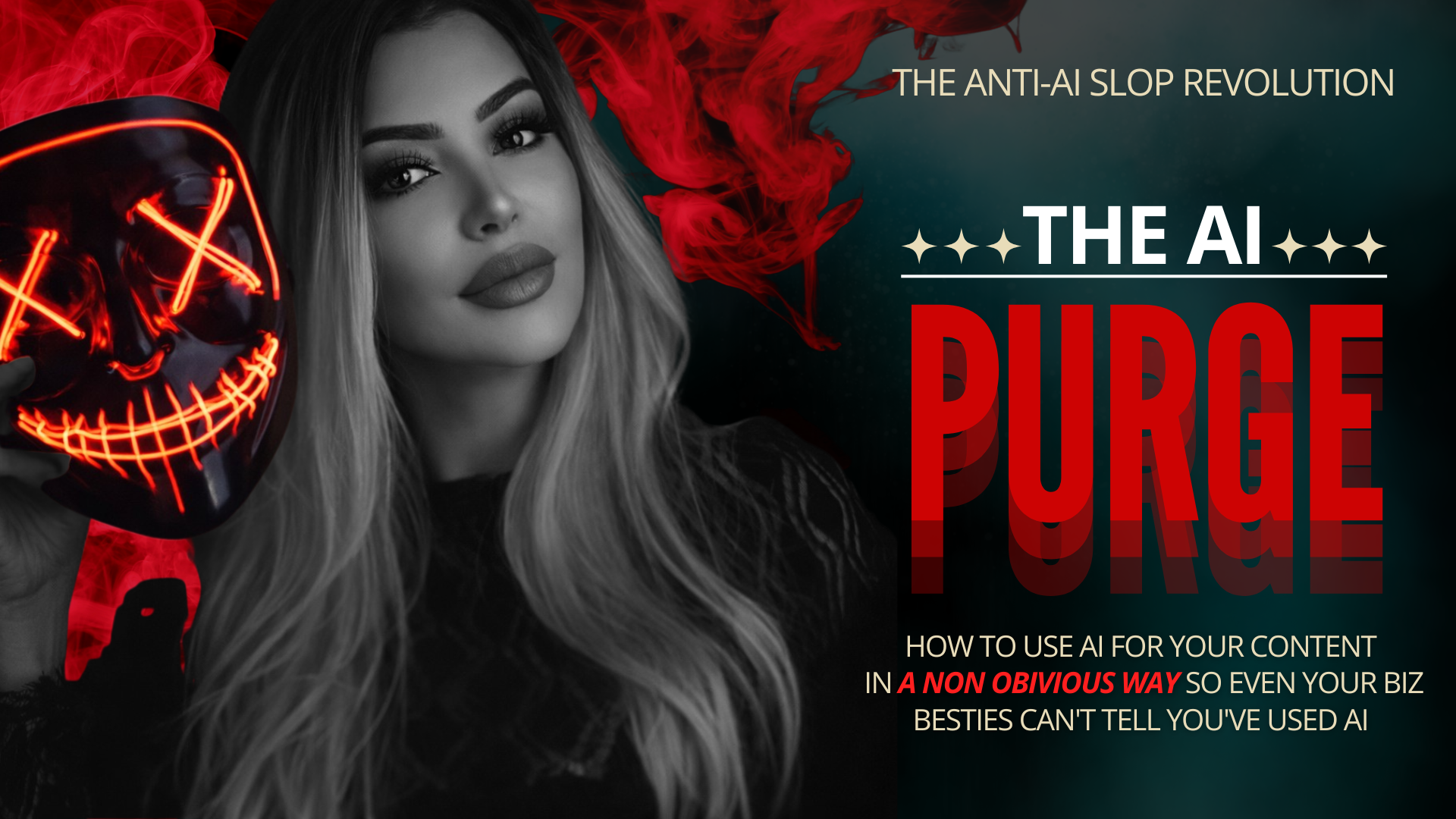
This is exactly why I created the AI Purge. I was watching genuinely excellent coaches accidentally position themselves as generic because their entire content creation process had been outsourced to AI.
The compound effect that's costing you premium sales
This isn't about one post that sounds slightly artificial. It's about the pattern that builds over time in your audience's subconscious assessment of your brand.
Every AI-generated caption reinforces the impression that you're following someone else's playbook. Every perfectly optimized email suggests you're using templates instead of drawing from your own experience. Every sales page that hits all the right psychological triggers but lacks authentic voice makes potential clients wonder what they're actually paying for.
Premium clients are pattern-matchers. They got successful by recognizing what works and what doesn't. When they see the same content structure, the same persuasion techniques, the same "vulnerability" across multiple coaches' feeds, they start to discount the entire category.
They assume everyone is using the same AI tools, following the same content frameworks, and fundamentally offering the same transformation with different branding.
If you're serious about premium positioning, you can't afford to blend into that noise.
What you can audit in your content right now
Take your last ten social media posts and read them out loud. Do they sound like something you'd actually say in a conversation with a friend? Or do they sound like they were written by someone trying to sound like you?
Look for these specific warning signs that scream AI-generated:
Your most interesting insight is buried in the middle instead of leading with it. AI tends to build up to points because it's programmed to provide context first, but premium clients don't need that much hand-holding.
You're using vocabulary that doesn't match how you actually speak. AI loves words like "cultivate," "elevate," and "optimize." If that's not your natural language, it shows immediately.
Every paragraph is roughly the same length with similar sentence structures. Real human writing has rhythm and variation. AI writes in neat, predictable blocks.
You're making broad statements without backing them up with specific examples from your actual experience. AI can't access your client stories, your personal failures, or your unique observations. It defaults to general principles that sound smart but lack substance.
The AI Slop Judge can give you an objective assessment of how much your content sounds like everyone else's, or you can book an AI Slop Audit if you want specific feedback on what's not working.
How to use AI without destroying your authority
I'm not anti-AI. I've built a multiple six-figure business partly by leveraging AI tools strategically. The difference is using AI as a research assistant and editor, not as your voice.
Here's how this works without killing your credibility:
Start with your own thoughts captured in your own words. Record a voice note about something you're genuinely thinking about. Transcribe it. Then use AI to clean up the transcript, organize your ideas, or research supporting information, but never let it generate your core message.
Use AI for background research, but write your main arguments yourself. If you're making a case for why most business advice is wrong, let AI help you find supporting statistics or examples. But the core insight should come from your brain, based on your experience.
Let AI help you structure your thoughts, but keep your language and examples. If you've written a rambling explanation of a complex concept, AI can help you organize it more clearly. But the voice and the insights should stay yours.
AI should amplify your expertise, not replace it. The goal is to create content faster and more efficiently, not to create content that could have been written by anyone else with the same prompt.
What happens when you eliminate AI slop
When you stop outsourcing your content to algorithms and start with your own voice first, several things change immediately:
Your engagement becomes more meaningful. Instead of generic "love this!" comments, you start getting responses from people who actually connect with your specific perspective and want to know more about working with you.
Premium clients start reaching out directly. When your content demonstrates original thinking and clear expertise, people who can afford high-ticket coaching recognize quality and inquire about your services.
Your content becomes impossible to replicate. Anyone can run your topic through ChatGPT and get something similar to what you used to post. But they can't replicate your specific experiences, your unique way of thinking about problems, or the lived-in expertise that comes through in authentic content.
You start attracting clients who are actually ready to invest. Premium buyers aren't looking for the cheapest option or the most polished marketing. They're looking for someone who thinks differently than they do and can help them get results they can't achieve on their own.
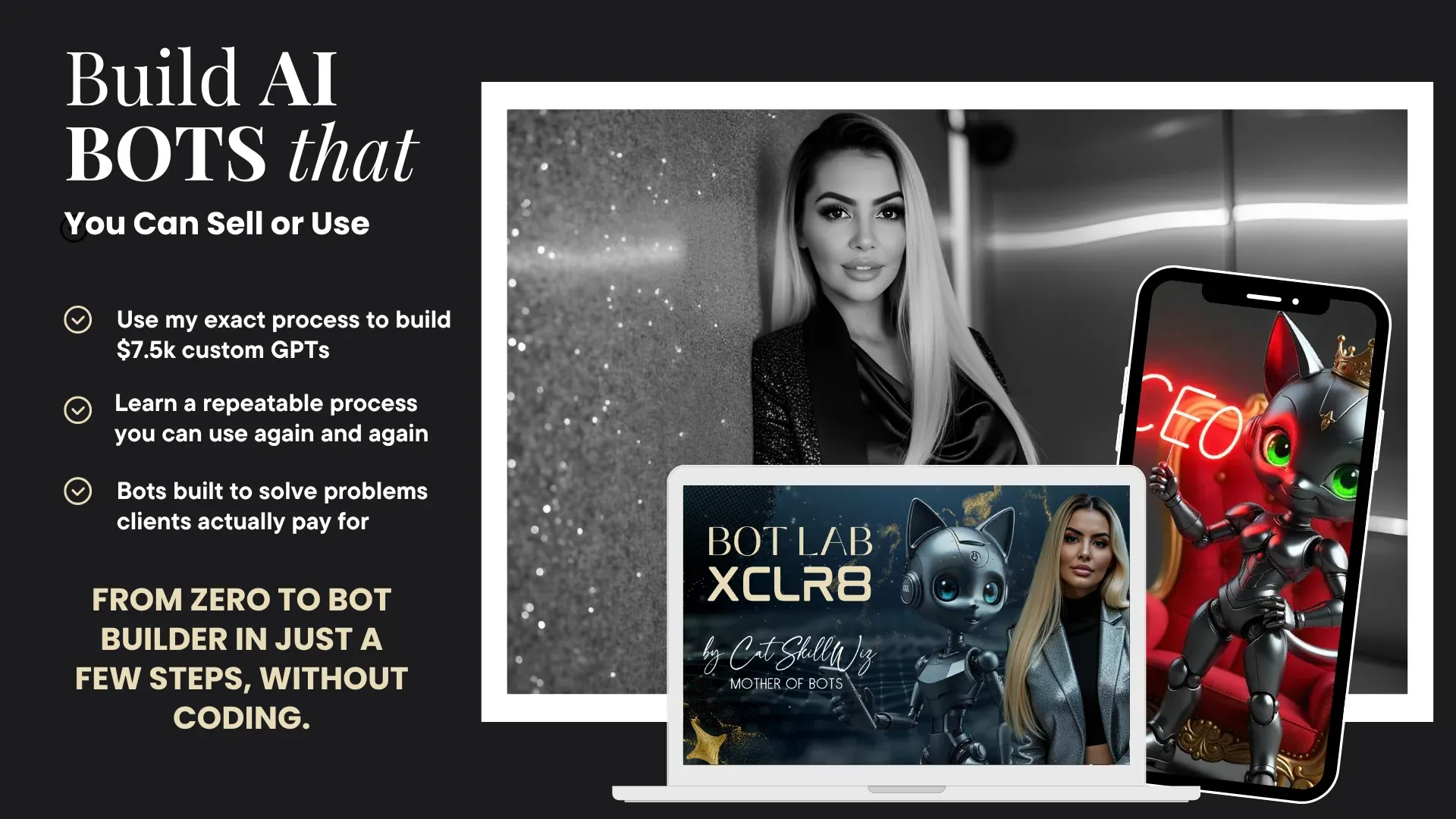
The Bot Lab XCLR8 program teaches you how to build AI systems that actually enhance your expertise instead of replacing it, because the future isn't about choosing between human intelligence and artificial intelligence. It's about using both strategically.
When you fix the AI patterns in your content, you're not just improving your marketing. You're repositioning yourself as someone who has something original to offer. And in a marketplace increasingly full of AI-generated sameness, originality becomes the ultimate premium differentiator.
Your premium clients are already out there, consuming content, making purchasing decisions. They're just not choosing you because your content doesn't sound like it came from a real person with real expertise. Stop letting AI make you sound like everyone else, and watch what happens when your content finally sounds like the expert you actually are.
FAQ
Is there a way to use AI for content without sounding robotic?
The key is never letting AI write your first draft. Start with your own voice notes, your actual thoughts, your lived experiences. Use AI to clean up transcripts, organize your ideas, or research supporting information, but the core content should always come from you. When you flip this process, your content maintains your authentic voice while still benefiting from AI efficiency.
How can I tell if my content has that AI slop feel?
Read your posts out loud. If they sound more formal than how you'd actually explain the concept to a friend, that's a red flag. Also watch for perfectly balanced sentence structures, motivational language you don't normally use, and content that lacks specific examples from your actual experience. The AI Slop Audit can give you objective feedback on specific patterns that are holding you back.
What if AI actually helps me communicate better?
AI can absolutely help you organize your thoughts and clean up your writing. The problem isn't using AI as a tool, it's using AI as your voice. There's a huge difference between "help me structure this concept I'm thinking about" and "write me a post about productivity." One amplifies your expertise, the other replaces it with algorithmic thinking.
Will my content perform worse if I stop using AI to write it?
You might get less broad engagement initially, but you'll get more meaningful responses from people who actually connect with your message. AI-optimized content is designed for vanity metrics, not for attracting premium clients. Premium buyers care more about authentic expertise than perfect hooks designed to game the algorithm.
What's the biggest mistake people make when trying to sound more human?
They try to edit AI content to sound more authentic instead of starting with their own thoughts. If ChatGPT wrote your first draft, editing won't fix the fundamental problem because the ideas and structure are still algorithmic. You need to flip your entire process: start human, then use AI as a tool to refine and improve what you've already created.
How do I create content faster without relying on AI to write everything?
Start by recording voice notes about concepts you're already thinking about or problems you're solving for clients. Use AI to transcribe and organize these recordings. Build a system for repurposing content across multiple formats. Reference past client conversations and results. The goal is to systematize your process without outsourcing your actual expertise to an algorithm.
Want the good stuff first?
I only email when there’s something worth knowing, updates, drops, and things I don’t post publicly.
If you miss it, that’s on you.
No SPAM. I will never sell your information, for any reason.